Just fill in your email below to begin
In addition to getting email coding and web accessibility tips, we will send you information about joining our communities. And of course, you will get your free trial to a tool that will help you fix your sites for accessibility. Just create your account on the next page by hitting "Purchase."
What is
web access pro
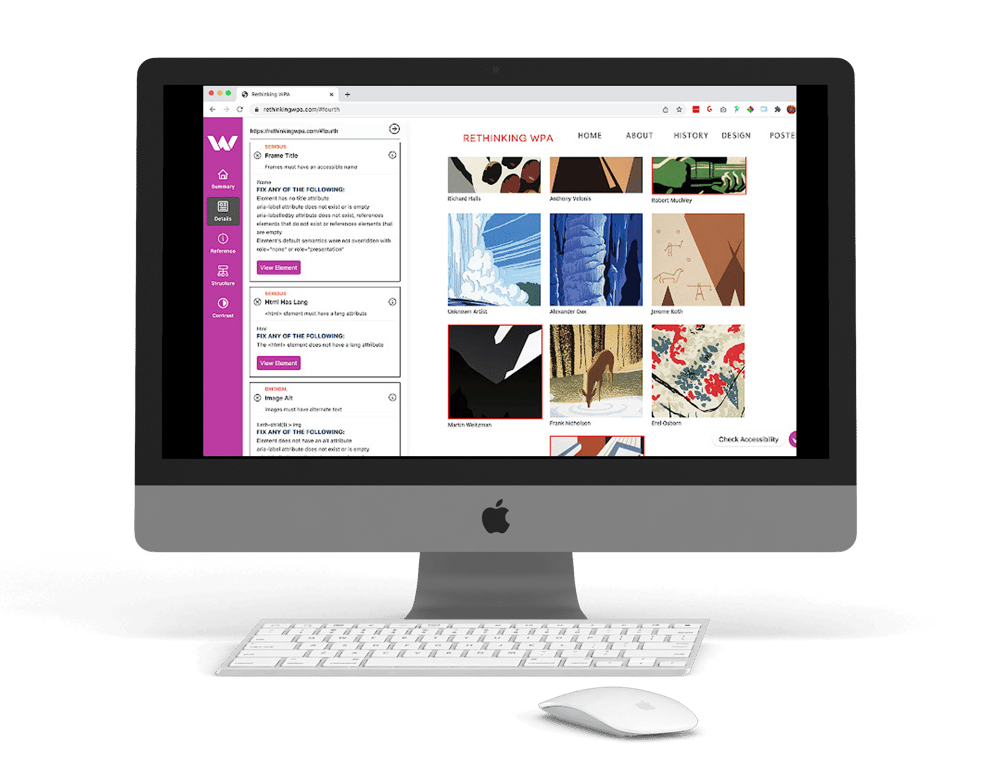
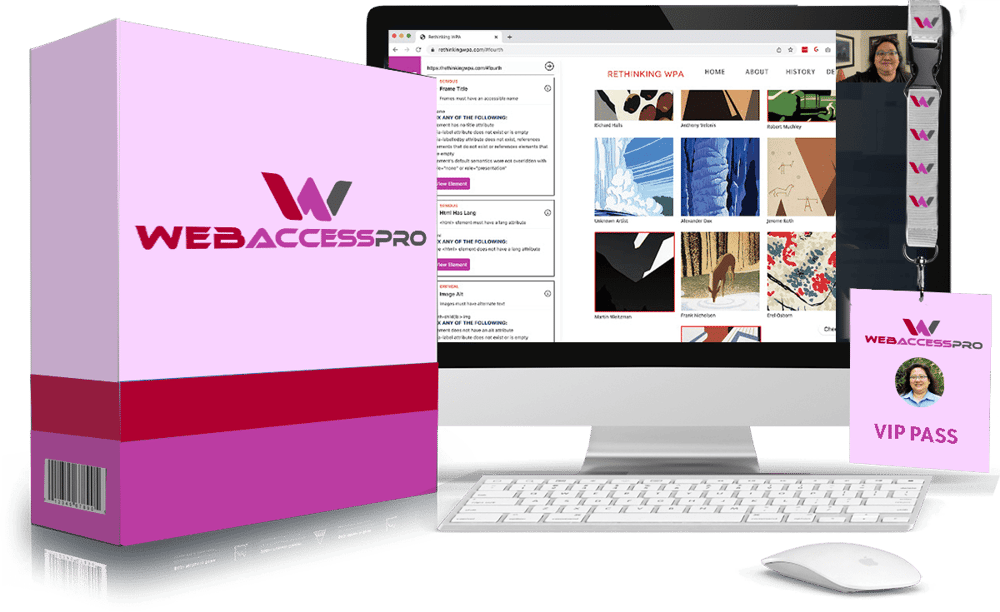
Web Access Pro is a chrome extension to analyze websites to determine compliance with accessibility guidelines. Items found to be non-compliant will be flagged and a reference that indicates a possible fix will be available. In this way. the extension can be used to help designers and developers build websites with accessibility in mind. This allows those with disabilities access to the content being presented.
In 2021, 97% of U.S. websites were determined to be non-compliant with accessibility standards. Although in the U.S., the Americans with Disabilities Act celebrated a 30 year anniversary recently and it was applied to all electronic and information technology in 2010, the scope of the problem shows that we are not doing enough to serve those with disabilities.
While the ADA did not offer specific guidelines for website compliance, the Web Content Accessibility Guidelines (WCAG) created by the nonprofit World Wide Web Consortium are a reference for understanding digital accessibility. In the United States, without an ADA-compliant website a business will be open to lawsuits. Internationally, the guidance is that most websites should follow WCAG 2.1 guidelines; however, laws and consequences differ from country to country.
From the National Law Review, U.S. companies have been inundated with lawsuits in the past several years. They have increased 75 percent. The cases target all manner of business across a wide range of industries.
us
- Skilled web designers able to provide custom solutions to clients
- Web designers that care about accessibility and equal access to the web
- We care about the user experience because we know accessibility is a key component of usability
- We aren't interested in just offering partial solutions that make navigating the web harder for the disabled
- We are lifelong learners who update our skills to a changing web
Them
- Web designers limited by their tools
- Web designers that either don't know or don't care about accessibility and helping the disabled access the web
- Web designers that don't fully understand usability because they don't know that accessibility is part of it
- Rely on partial solutions like overlays that often make it harder for the disabled to complete basic tasks on the web
- Web designers that don't want to understand the medium they work in by not learning how to code
9600 +
errors found
130 +
sites scanned
205 +
pages scanned
our values
our manifesto
We agree with Tim Berners-Lee who felt that making the web open to all is a foundational tenet. We believe that the web is for EVERYONE, regardless of ability. We believe that designers and funnel builders should be aiming to the highest standards when building websites, landing pages, and funnels. This includes making sure that what we build is accessible to all users, including those with disabilities. We believe that in doing so, we improve the user experience for everyone. We understand that accessibility is a key part of usability. We also believe that if this means we need to get additional training to get our skills up that it is part of our duty to do so. We, as designers and funnel builders, do not avoid learning how to code, we embrace it.
schedule your
complimentary strategy call

Schedule a call to discuss how the right funnel can help grow your business AND join Maribel's group where you can receive technical support for FREE